
Overhead Crane Selection by Workshop Height in Kazakhstan
menu_open
Content Quick Link
Overhead Crane Selection by Workshop Height in Kazakhstan
Key Takeaway -Most Important Insight First-
Workshop height is the most critical factor in overhead crane selection in Kazakhstan, often more important than lifting capacity itself. If it is not calculated correctly, even a correctly rated crane (5 ton, 10 ton, or 15 ton overhead crane) may fail to achieve the required lifting height in real production conditions.
- Workshop height directly determines crane structure, hoist type, and usable lifting height
- Low ceiling workshops require low headroom or European hoist systems to maximize hook travel
- Lifting capacity alone is not enough—hook height and approach distance matter more in real operation
- Single girder cranes are more common in low-height workshops, while double girder cranes are used when height allows
- Incorrect height calculation leads to reduced efficiency, installation issues, and production limitations
- Retrofit workshops in Kazakhstan often require customized crane design instead of standard models
Questions This Guide Solves
In Kazakhstan industrial workshops, crane selection is rarely decided by specifications alone. It is usually based on a simple check from experienced engineers and buyers: will this crane actually work in my workshop space, or not?
These are the real questions this guide helps clarify before installation decisions are made.
How does workshop height affect overhead crane selection in Kazakhstan industrial projects?
Workshop height is the first physical limitation in crane design. In many Kazakhstan steel workshops, repair bases, and manufacturing plants, the building structure is already fixed, so height cannot be adjusted later.
In practice, workshop height directly influences:
- Maximum usable lifting height
- Choice between single girder and double girder cranes
- Whether a standard hoist or low headroom system is suitable
This is why height is always checked before tonnage selection. If the height is not suitable, even a correctly rated crane will feel limited in daily operation.
What is the difference between usable lifting height and rated lifting height?
Rated lifting height is the theoretical value provided in specifications. Usable lifting height is what remains after installation inside the real workshop.
In Kazakhstan projects, usable height is affected by:
- Crane beam structure
- Hoist body size
- Hook block height
- Safety clearance requirements
This difference is important because two cranes with the same rating can perform very differently depending on workshop conditions. In real use, only usable lifting height matters for production.
When should a low headroom crane be used in a low ceiling workshop?
Low headroom cranes are typically used when workshop height is limited, usually around 4–7 meters, which is common in many Kazakhstan industrial buildings.
They are recommended when:
- The workshop is a retrofit or existing structure
- Vertical space is already restricted by roof trusses or beams
- Higher lifting height is needed without modifying the building
In simple terms, when every centimeter of height matters, low headroom design becomes the practical choice.
What is the difference between European hoist and standard hoist systems?
Standard hoists are traditional designs widely used in general workshops. They are simple, cost-effective, and suitable for taller buildings where space is not a limitation.
European low headroom hoists are more compact and integrated. They are designed to reduce vertical space loss and improve lifting height efficiency.
In Kazakhstan workshop conditions:
- Standard hoists work well in open or taller structures
- European hoists are preferred in compact or height-limited workshops
The main difference is not complexity, but how much usable height each system leaves for actual lifting work.
How do you calculate hook height and crane clearance correctly?
Correct calculation is based on the full vertical structure inside the workshop, not a single value.
In Kazakhstan industrial practice, calculation includes:
- Workshop clear internal height
- Crane girder structure height
- Hoist body height
- Hook block size
- Safety clearance margin
When these elements are combined, they define the real usable lifting height. Missing any of these can lead to reduced working space after installation.
Which crane type is best for steel workshops, fabrication plants, and retrofit factories?
There is no single fixed model. The best crane depends on workshop height and working conditions.
In general:
- Steel workshops often use single girder cranes with compact hoists for efficient space use
- Fabrication plants may use double girder cranes when height and load conditions allow
- Retrofit factories usually require customized low headroom solutions based on existing structure
In Kazakhstan projects, the correct choice is always based on matching the crane to the building, not the other way around.
How do real installation conditions in Kazakhstan affect crane design decisions?
In real Kazakhstan workshops, installation conditions often define the final crane design more than initial specifications.
Common factors include:
- Fixed building structures that cannot be modified
- Existing roof systems, ducts, or pipelines
- Limited vertical clearance in older industrial buildings
- Need for quick installation without stopping production
Because of these conditions, crane systems are often customized to fit real workshop space. In practice, successful projects are those where the crane works smoothly within existing structures without requiring building reconstruction.
Introduction: Why Workshop Height Determines Crane Design
Workshop height as the base condition in real projects
In Kazakhstan industrial workshops, crane selection usually starts from a very practical point, not a technical drawing. Before load capacity or span is discussed, experienced engineers first look at one thing: how much real height is available inside the building.
This is because many workshops across Kazakhstan—steel fabrication sites, repair bases, and manufacturing halls—operate within fixed structures. Once the crane is installed, there is no room for correction. So workshop height becomes the first condition that quietly decides whether the crane will work smoothly in daily operation or feel restricted from day one.
A crane may be rated for 5 ton or 10 ton, and in some cases even a 15 ton overhead crane, but if the building height is not enough, the hook will not reach the required working position. In practice, this is often noticed not during design, but only when installation begins on site.
That is why in many Kazakhstan projects, people often say in a straightforward way: "Let's check the height first, then we talk about the crane."
Why many workshops in Kazakhstan face height limitations
Workshop height is the first physical limitation in crane design. In most Kazakhstan industrial projects, this is the first measurement that engineers and suppliers request. Not because it is formal, but because everything else depends on it.
Workshop height directly controls:
- Maximum usable lifting height inside the workshop
- Whether a single girder or double girder crane is practical
- Whether a standard hoist can be used, or a low headroom hoist is required
If this basic step is not correct, later decisions become less reliable, no matter how detailed the crane specification is.
In Kazakhstan, many workshops were built in earlier industrial periods or expanded gradually over time. As a result, the structure is usually fixed, and vertical space cannot be easily changed.
This creates a very common situation in real projects:
- Legacy steel structures with fixed roof trusses already occupying upper space
- Crane runway beams installed at lower levels during past modifications
- Ventilation ducts, lighting systems, and insulation layers reducing clear height
- In some workshops, pipelines or service lines passing through overhead space
At first glance, the workshop may look normal. But once the actual measurement is taken from floor to the lowest obstruction, the usable height is often less than expected.
In many Kazakhstan sites, this is the moment when design becomes practical, not theoretical.
How workshop height affects crane selection in real operation
Once the real height is confirmed, crane configuration starts to take shape in a very direct way. There is no complexity here—just matching equipment to available space.
It mainly affects three areas:
- Lifting height efficiency
Lower available height means reduced hook travel. In daily work, this affects whether a load can be lifted in one smooth motion or needs repositioning during operation. - Crane structure choice
In lower workshops, single girder overhead cranes are often preferred due to compact structure. In taller buildings, double girder systems are used more comfortably because they provide better lifting range. - Hoist configuration
This is usually where the biggest difference appears. Standard hoists take more vertical space, while low headroom or European-style hoists are designed to reduce this loss and recover usable lifting height.
In simple terms, the same workshop can produce very different working results depending on how height is handled during selection.
Why tonnage alone is not enough in Kazakhstan projects
A common situation in procurement is very simple. A buyer requests a 10 ton overhead crane, and the assumption is that capacity defines everything.
On paper, this looks correct. In real workshop conditions, however, issues often appear later.
Typical problems include:
- The crane can lift the load, but not to the required height
- Large steel parts or molds cannot be positioned properly under the hook
- Installation clearance becomes too tight for safe and stable operation
So in practice, tonnage is only one part of the decision. It tells you how much weight the crane can lift, but not how well it fits inside the workshop space.
In Kazakhstan industrial practice, experienced engineers usually verify one thing first: "Will the crane still have enough working height after installation?"
That question often matters more than the capacity itself.
Practical takeaway from real engineering experience
When workshop height is treated as the starting point of crane design, most selection problems can be avoided early.
In Kazakhstan projects, a practical approach is usually followed:
- Measure clear internal height carefully, not just building drawings
- Check all overhead obstructions inside the workshop space
- Match hoist type to real vertical clearance conditions
- Then decide crane structure based on actual working requirements
It is not a complicated process, but it is an important one. In many cases, this step alone determines whether the crane will operate smoothly for years, or feel limited from the first day of use.
Low Ceiling Workshop Solutions in Kazakhstan
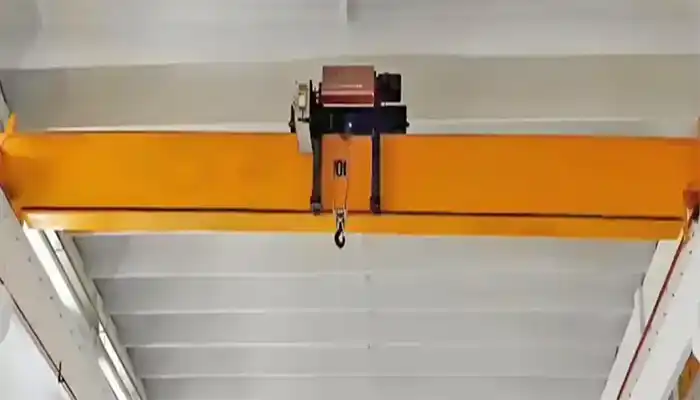
low ceiling workshop overhead crane
Typical Low Workshop Conditions in Kazakhstan
In Kazakhstan industrial practice, people usually don't spend too much time on theory. The first question from a workshop owner or engineer is simple: "Will this crane actually work in my building, or not?" That is the real starting point.
Many workshops across Kazakhstan—especially in steel, repair, and light manufacturing sectors—were built years ago or expanded step by step. The structure is already there, production is already running, and equipment upgrades must fit into the same space. So when ceiling height is limited, the crane design has to be practical, reliable, and easy to maintain in local conditions.
This is where low headroom crane solutions become a very common choice.
In many industrial zones in Kazakhstan, workshop height is often in the range of 4 to 7 meters. It is not unusual. You see it in older steel workshops, repair bases, and small production facilities that still support a lot of local industry work.
These workshops are usually:
- Steel fabrication shops handling cutting, welding, and assembly work in one space
- Mechanical repair plants serving mining, transport, or agricultural equipment
- Small manufacturing factories where production and storage are combined
In daily operation, workers often say something like, "Space is enough on the floor, but not above." That is exactly the situation. The work is practical, but the vertical space is already tight.
Engineering Challenge in Kazakhstan Workshops
In Kazakhstan, many buyers are not only thinking about buying equipment—they are thinking about long-term operation, maintenance availability, and how the system will behave in winter conditions and continuous use.
The main challenge in low ceiling workshops is straightforward:
Standard crane systems naturally take away part of the lifting height.
So even if the crane is correctly selected for 5 ton or 10 ton capacity, the usable hook height may feel limited in real operation.
Typical constraints include:
- Roof trusses and crane runway beams already occupying vertical space
- Standard hoist structures reducing effective lifting height
- Existing workshop layouts with lighting, ducts, or pipelines
- Older buildings where crane installation was not originally planned
In practice, operators often notice this only after installation: "The crane is fine, but I wish the hook could go a bit higher."
That small gap becomes important in daily work.
Practical Design Solutions Used in Kazakhstan
In Kazakhstan industrial projects, the solution is usually not to rebuild the workshop. That is rarely practical. Instead, engineers focus on making better use of existing space.
This is where experience matters more than theory.
Common and practical solutions include:
- Low headroom overhead crane systems
This is widely used in retrofit workshops. The hoist is placed closer to the beam, reducing wasted vertical distance and improving usable lifting height. - Compact hoist selection for real working conditions
Many buyers prefer European-style low headroom hoists because they offer more hook travel in the same building height. It is a very practical choice, especially in tight workshops. - Optimized girder and trolley arrangement
Small design adjustments in beam height and trolley positioning can recover valuable centimeters of lifting space. In Kazakhstan projects, these small details often decide whether the crane feels "comfortable" or "tight" in use. - Better hook travel utilization
The goal is simple: use every available meter inside the building, without touching or modifying the structure.
In local practice, buyers usually prefer solutions that are straightforward to install and easy to maintain. As many say in business discussions: "We need something that works and keeps working."
Result for Buyers in Kazakhstan
When the crane is properly matched to a low ceiling workshop, the difference is felt immediately in daily production.
- More usable lifting height within the same workshop structure
- Easier handling of steel parts, molds, and machinery components without constant repositioning
- Smoother workflow during installation and assembly tasks
- Better adaptation to existing industrial buildings without reconstruction cost
In many Kazakhstan workshops, this is what buyers value most—practical improvement, not complex redesign.
At the end of the day, the equipment should fit the building, support the workers, and stay reliable in long-term operation. That is usually the standard judgment in local industrial decisions.
Hook Approach and Lifting Height Calculation
Why Calculation Matters in Kazakhstan Projects
In Kazakhstan industrial projects, crane selection is usually not decided in a meeting room alone. It is often decided after someone looks at the workshop, measures the height, and says a simple line: "Let's check if this crane will really work here."
That kind of practical thinking is very common in local steel workshops, repair bases, and manufacturing plants. People care less about complicated theory, and more about whether the equipment will fit the building, support daily work, and stay reliable in long-term operation.
This is exactly where hook height and calculation become important—not as theory, but as a real working check before installation.
In many Kazakhstan workshops, especially in steel fabrication and industrial repair sites, the first attention often goes to capacity. For example, 5 ton or 10 ton overhead crane is requested, and the assumption is that everything else will follow.
But in practice, experienced engineers and workshop owners know something important:
If lifting height is wrong, the crane will not serve production properly, even if it is strong enough.
This becomes clear after installation, when:
- The hook cannot reach the required lifting point
- Large steel structures or equipment cannot be lifted vertically
- Operators need extra handling steps just to complete simple lifts
And in daily production, extra steps mean extra time. As many local technicians say in a straightforward way: "We don't need problems after installation. We need it to work from day one."
So the real issue is simple:
Rated lifting height on paper is not the same as usable working height in the workshop.
In Kazakhstan conditions, where workshops are often fixed structures, this difference becomes very practical.
Standard Calculation Logic Used in Real Workshops
When experienced suppliers or engineers evaluate a Kazakhstan workshop, they do not look at a single number. They look at how the whole vertical system works together.
Usable lifting height depends on a few very practical factors:
- Workshop clear height
This is the real inside height from floor to the lowest obstruction. Not the building drawing, but the actual measured space. - Crane beam structure height
The girder and runway system already takes part of the available space. In older workshops, this is often fixed and cannot be changed. - Hoist body height
This is where design matters. Standard hoists take more space, while compact or European-style low headroom hoists help save vertical clearance. - Hook block size
Small detail, but in low ceiling workshops it makes a real difference in final lifting range. - Safety clearance requirement
A small margin is always kept. In Kazakhstan practice, people prefer safe margins rather than pushing equipment to limits.
When all these are combined, the final lifting height becomes clear. It is not a guess. It is a result of real structure conditions.
In many local projects, this step is done carefully because once the crane is installed, changing height is not easy anymore.
Key Concept: Hook Approach Distance in Real Operation
Another detail that experienced Kazakhstan workshop managers often pay attention to is hook approach distance.
This simply means how close the hook can work to the side of the workshop.
It sounds technical, but in daily work it is very practical.
In real workshops, especially in steel fabrication and repair facilities, space is always used efficiently. Materials are often stored near walls, and machines are placed according to available layout.
So hook approach distance affects:
- How close the crane can lift material from wall-side storage
- Whether a load can be picked directly or needs repositioning
- How smoothly the crane covers the full workshop width
In simple words:
Better hook approach means better use of workshop space.
In Kazakhstan industrial thinking, people often value this kind of practicality. If the crane saves time in daily lifting and reduces unnecessary movement, it is considered a good investment—not because of specifications, but because it works smoothly in real conditions.
Common Buyer Mistake in Kazakhstan Projects
One situation appears again and again in crane procurement discussions.
A buyer says:
"We need a 10 ton overhead crane."
That is clear, but not complete.
What is often missing is the understanding of how much usable height will remain after installation.
In real Kazakhstan workshop conditions, this leads to problems like:
- Crane is installed correctly, but lifting height feels limited
- Large parts cannot be lifted vertically without adjustment
- Operators need extra steps just to complete normal lifting tasks
At that point, people usually realize something very practical:
The crane is not wrong, but the initial calculation was incomplete.
Experienced local engineers usually check one simple thing first:
"How much real lifting height do we have after everything is installed?"
Not just what is written in the specification sheet.
In Kazakhstan business culture, where trust and long-term reliability matter, equipment is expected to work without constant adjustment. So a correct calculation at the beginning is not just technical work—it is part of keeping production stable and avoiding problems later in daily operation.
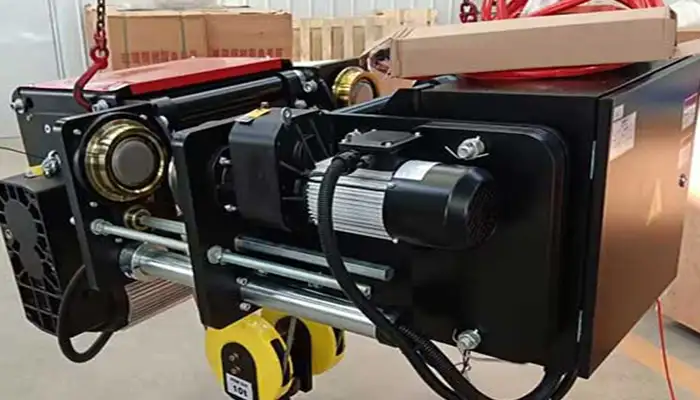
Standard Hoist System in Kazakhstan Workshops
In Kazakhstan industrial workshops, hoist selection is usually not a theoretical discussion. It is a practical decision made after looking at one simple reality: how much usable height do we actually have inside the building?
Many buyers—whether in steel fabrication, repair bases, or manufacturing plants—care about reliability first. The equipment should work in winter conditions, handle daily loads without issues, and not create unnecessary maintenance problems. So the choice between a standard hoist and a European low headroom hoist is not about branding. It is about space, efficiency, and long-term usability in real workshop conditions.
The standard hoist system is widely used in Kazakhstan, especially in older or general-purpose workshops. It is a familiar solution, and many local engineers know how to install, maintain, and repair it without difficulty.
This type of hoist is typically chosen because:
- It has a traditional design that is easy to understand and operate
- It fits well in taller workshops where vertical space is not a problem
- It usually comes with a lower initial investment cost
- Spare parts and maintenance are straightforward in local service networks
In many industrial discussions, people describe it in a simple way: "It is a proven system, nothing complicated."
But in real low ceiling workshops, limitations start to appear.
The main challenges include:
- More vertical space is consumed by the hoist structure itself
- Reduced effective lifting height, especially in 4–7 meter workshops
- Less efficient use of available workshop space
- In retrofit buildings, it may feel too "tall" for the environment
So while it works well in general applications, it is not always the best fit for compact or height-limited workshops commonly found in Kazakhstan industrial zones.
European Low Headroom Hoist in Practical Use
The European low headroom hoist is increasingly used in Kazakhstan projects, especially where workshop height is limited or where production efficiency is a priority.
It is designed with a more compact structure, and the hoist is integrated closer to the crane beam. This helps recover valuable lifting height inside the same building space.
In practical terms, it is often selected for:
- Steel plants where heavy components need stable and precise lifting
- Machining and assembly workshops requiring accurate positioning
- Export-oriented manufacturing facilities where efficiency and consistency matter
- Retrofit workshops where building structure cannot be modified
From a practical viewpoint, many Kazakhstan users appreciate it because it simply gives more usable space without changing the workshop itself.
Key advantages include:
- Higher usable lifting height within the same building
- Smoother and more controlled lifting movement during operation
- Better adaptation to low clearance workshops
- More stable performance in continuous industrial use
In daily operation, workers often notice one simple difference: lifting feels easier, not because the crane is stronger, but because the space is used more efficiently.
Selection Logic for Buyers in Kazakhstan
In Kazakhstan industrial decision-making, choices are usually made based on practicality and long-term reliability. The same applies here.
There is a simple way experienced buyers and engineers approach this:
- If workshop height is sufficient → standard hoist is usually acceptable
This works well in taller buildings where vertical space is not restricted. It is a practical and cost-balanced option. - If workshop height is limited → European low headroom hoist is preferred
In low ceiling workshops, it helps recover lost lifting height and improves daily usability. - For retrofit or older industrial buildings → low headroom design is often necessary
In many Kazakhstan workshops, structural changes are not realistic, so the crane must adapt to the existing space.
In local practice, people often say in a straightforward way: "We don't change the building for the crane. We choose the crane that fits the building."
That approach reflects how most industrial decisions are made—based on stability, long-term use, and avoiding unnecessary complications after installation.
Installation in Kazakhstan
Steel Fabrication Workshop (Low Height Case in Kazakhstan)
In Kazakhstan industrial projects, crane selection becomes much clearer when you look at real workshop conditions instead of only technical drawings. Most decisions are not made in ideal environments. They are made in existing steel workshops, repair bases, and manufacturing plants where space is already fixed and production cannot stop.
Below are three typical installation situations that reflect how overhead crane solutions are actually applied in local practice.
In many steel fabrication workshops across Kazakhstan, especially in older industrial zones, the building height is limited and already occupied by structural beams and workshop systems.
The main problem is simple:
limited clearance reduces usable lifting height, and standard crane setups leave too little working space for daily steel handling.
In one typical case, the workshop was used for steel cutting, welding, and assembly of structural parts. The operators needed to lift steel sections regularly, but the hook height was not sufficient for smooth vertical movement.
The practical solution used was:
- Single girder overhead crane
- Combined with low headroom European hoist system
This combination was selected not for complexity, but for space efficiency inside the existing building.
The result in daily operation:
- Noticeably improved usable hook height
- Easier lifting of steel beams and assembled structures
- Smoother material flow between cutting and assembly areas
Workers often describe it in a simple way: "Now the crane works with the workshop, not against the space."
Machinery Manufacturing Plant (Medium Height Case in Kazakhstan)
In machinery manufacturing plants in Kazakhstan, workshop height is usually moderate, but operations are more varied. The crane is not only lifting heavy parts—it is also supporting assembly, positioning, and maintenance work.
The main challenge in this type of plant is not extreme height limitation, but flexibility. Different machines and components require different lifting positions, sometimes with higher precision.
In one typical setup, the requirement included:
- Lifting machine parts of different sizes
- Supporting assembly line positioning work
- Maintaining stable and controlled lifting movement
The chosen solution was:
- Double girder overhead crane
- With optimized lifting and trolley configuration for better control
This setup provides better structural stability and more precise load handling, especially during assembly work where positioning accuracy matters.
The result in operation:
- Stable lifting performance across different loads
- Better control during assembly and installation tasks
- Improved precision when positioning machinery components
In this type of plant, reliability is often valued more than speed. As many local engineers say, "We prefer stable lifting, not rushed lifting."
Retrofit Industrial Building Case in Kazakhstan
Retrofit projects are very common in Kazakhstan, especially in older industrial zones where buildings were constructed decades ago and now need modernization.
In this case, the biggest limitation is usually structural:
the existing workshop cannot be modified, and the crane must fit the building exactly as it is.
The main problem:
- Fixed roof structure and crane runway height
- Limited possibility for structural changes or rebuilding
- Need to restart or upgrade production quickly without long downtime
Because of these constraints, a standard crane design is usually not enough.
The solution applied was:
- Customized overhead crane system designed according to actual height restriction
- Full adjustment of hoist type, beam configuration, and lifting height calculation
Everything was based on measured workshop conditions, not standard assumptions.
The result:
- Full production capability restored without changing building structure
- Safe and stable lifting operation within existing height limits
- Workshop returned to normal operation without major construction work
In Kazakhstan practice, this type of solution is often appreciated because it avoids unnecessary reconstruction. As many business owners prefer to say: "If the building is solid, we just upgrade inside it."
Main Content Summary: Engineering Decision Logic
Workshop height comes first, not tonnage
In Kazakhstan industrial projects, crane selection is usually not decided in one step. It is a process where workshop conditions are checked first, then technical options are adjusted to fit the space. Most experienced buyers and engineers follow a simple principle: first understand the building, then choose the crane.
This approach avoids problems later during installation and daily operation. It also reflects a very practical mindset common in local industry—equipment should fit the workshop, not force the workshop to change.
In real Kazakhstan projects, workshop height is always the first control point in crane design.
Even before talking about 5 ton, 10 ton, or 15 ton overhead crane capacity, engineers first check:
- How much clear height is available inside the workshop
- What structural elements reduce vertical space
- Whether lifting height will be enough for daily production tasks
If this step is skipped, the crane may still be installed, but its usability can be limited. That is why experienced suppliers always treat height as the starting point of the design process.
Low ceiling workshops need compact and practical engineering
Many workshops in Kazakhstan are not new constructions. They are existing steel structures, repair bases, or expanded factories where height cannot be changed easily.
In these cases, the crane design must adapt to the environment.
Typical approach includes:
- Using compact crane structures to reduce unnecessary space loss
- Selecting low headroom hoist systems to improve usable lifting height
- Adjusting beam and trolley design based on real building conditions
This is not about advanced design theory. It is about making sure the crane fits inside the workshop and works smoothly every day.
In local practice, the thinking is straightforward: "We use what we have, and we make it work properly."
Lifting height calculation must include real structural losses
One common issue in crane selection is only focusing on rated lifting height. In Kazakhstan workshops, this is not enough.
Real usable lifting height must include:
- Crane beam structure height
- Hoist body size
- Hook block dimensions
- Safety clearance above lifting area
If any of these are ignored, the final result may differ from expectations after installation.
This is why careful calculation is important before production starts. It prevents situations where the crane works mechanically but does not fully meet workshop needs.
Hoist selection directly affects daily productivity
The choice between standard hoist and European low headroom hoist is not just a technical preference. It directly affects how much usable space the workshop has.
In Kazakhstan industrial conditions:
- Standard hoist systems are suitable for taller workshops and general use
- European low headroom hoists are preferred in height-limited or retrofit workshops
The key difference is simple: one saves space, the other uses more space.
In daily operation, this becomes visible when lifting large steel parts or assembling machinery. More available hook height means fewer limitations during work.
Real conditions in Kazakhstan require customized crane solutions
One important conclusion from many industrial projects in Kazakhstan is this:
Standard crane configurations do not always match real workshop conditions.
Each workshop has its own structure, height limitations, and production style. That is why customization is often necessary.
This may include:
- Adjusting crane type based on workshop height
- Selecting hoist system according to vertical clearance
- Designing lifting configuration based on actual production flow
In practice, successful crane installation in Kazakhstan is not about using a fixed model. It is about matching the equipment to the workshop conditions so that production can continue smoothly without structural changes.
That is the core logic followed in most real industrial decisions.
Conclusion
In Kazakhstan industrial practice, selecting an overhead crane is rarely just a purchase decision. It is part of how a workshop keeps production stable and workable over the long term. That is why workshop height is always the first point to understand before anything else is discussed.
Many experienced buyers in steel workshops, repair bases, and manufacturing plants often say it in a very direct way: "If the crane fits the building, the rest will follow." This reflects a very practical approach—equipment must match real space conditions, not only technical tables.
Choosing the right overhead crane based on workshop height in Kazakhstan is a technical decision that directly affects production efficiency, operational safety, and long-term usability. When the height is not correctly evaluated, even a properly rated crane—whether it is a 5 ton, 10 ton, or 15 ton overhead crane—may not deliver the expected working performance inside the workshop.
In real industrial conditions, the decision process is usually simple and structured:
- Start from building height and real usable lifting space
- Then determine crane structure, such as single girder or double girder design
- Finally select the hoist configuration, including standard or European low headroom systems
This sequence is important because each step depends on the previous one. Skipping it often leads to limitations during installation or daily operation.
When workshop height is properly analyzed from the beginning, even demanding lifting tasks can be handled in a stable way. Steel structure handling, machinery installation, and medium to heavy lifting operations in the range of 5–15 tons can all be supported when the crane is correctly matched to the building.
In Kazakhstan, where many workshops operate in existing structures and upgrades must work within fixed space, the real value of a crane is not only its capacity, but how well it fits into daily production without forcing changes to the workshop itself.
That is the final point most local buyers come back to: practical fit matters more than theoretical specification.

Article by Bella ,who has been in the hoist and crane field since 2016. Bella provides overhead crane & gantry crane consultation services for clients who need a customized overhead travelling crane solution.Contact her to get free consultation.